
/ Case study
Project CETI: Listen to the Whales
After launch, the whale campaign learned to listen back, with a voice archive that transcribes every message on its own
Fri3nds project record, 2026
Who Project CETI is and why Listen to the Whales needed a development partner
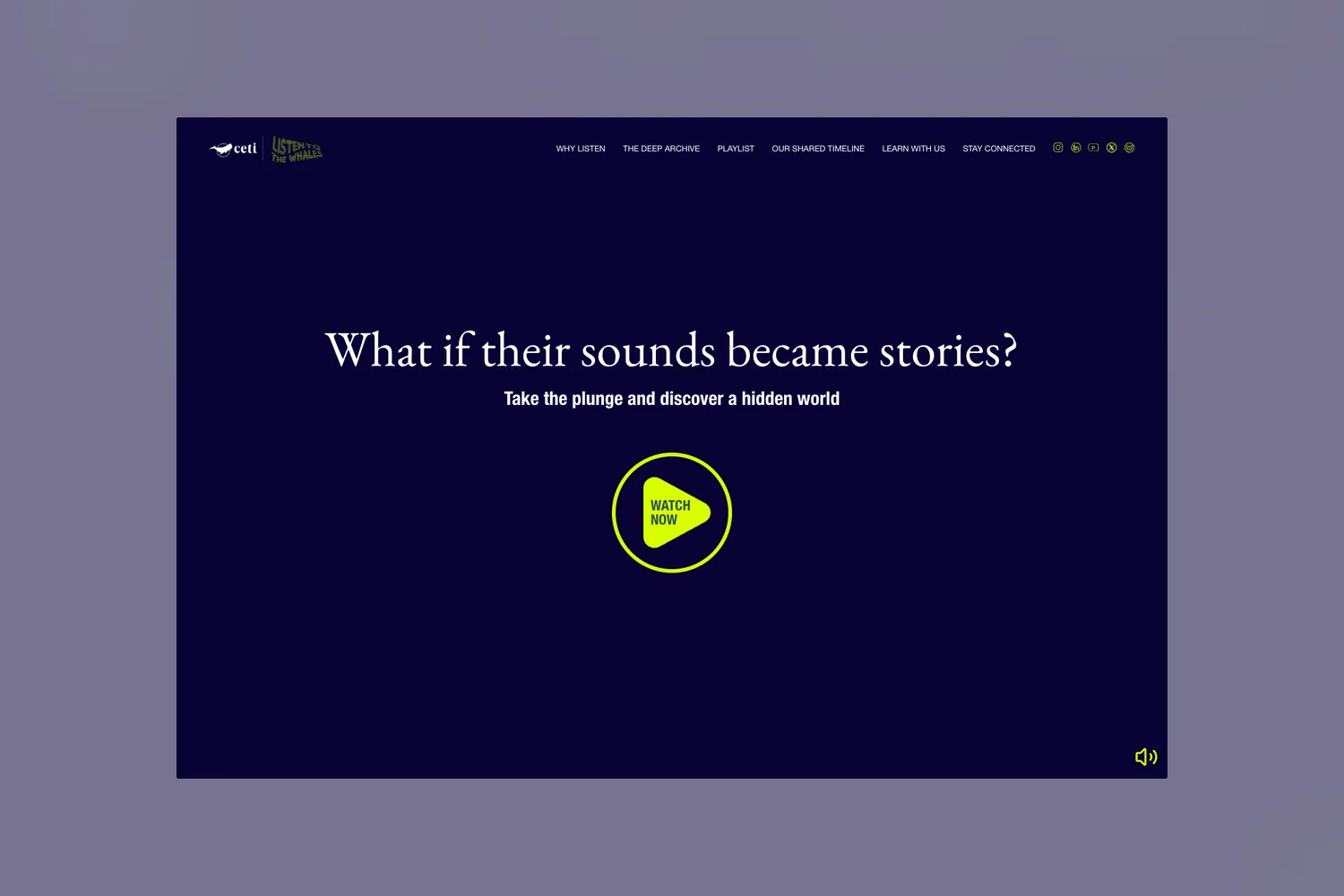
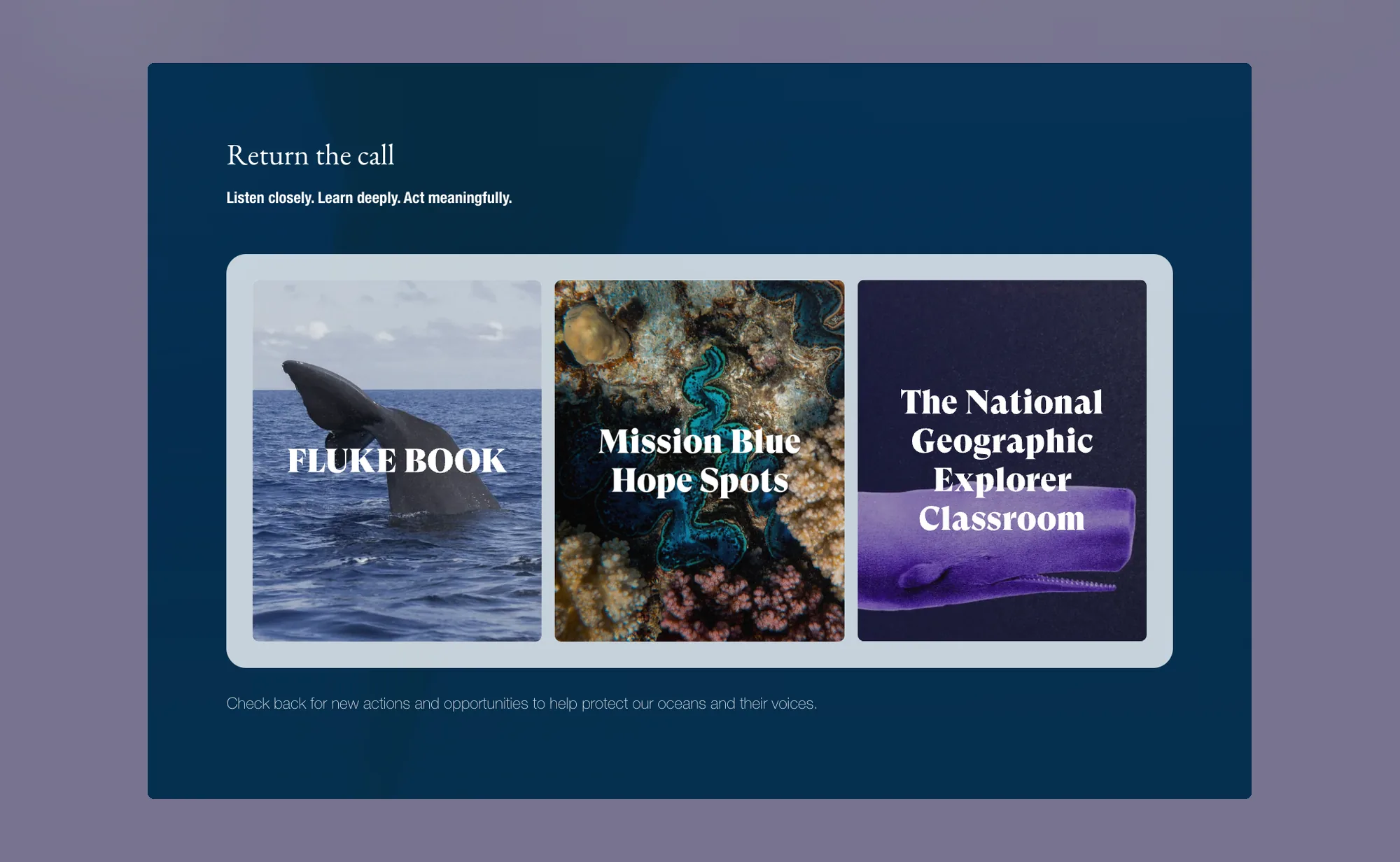
Project CETI is a nonprofit using machine learning and robotics to understand how sperm whales communicate. Listen to the Whales is its invitation to everyone else: a campaign site that asks the public to slow down and listen. Critical Mass conceived and designed the campaign, with a full team behind it, from content strategy and writing to UX and design direction. Fri3nds came in as the Webflow development partner, turning those designs into a working site. The launch had to line up with National Geographic's story, so we finished the build, set up the domain and waited, ready to go live the moment the green light came.
"And we are live on social! Thanks to all the Fri3nds Team for your support getting us to this moment!"
Ashley Zafaranlou, Project CETI
The challenge: a five-person team with more ideas than hands
Launch day was the start, not the finish. The nonprofit side of CETI is small, and web requests don't arrive on a schedule: a paper gets accepted, a new partner signs on, a call to action needs to change this week. Every request competed with the last one. So CETI moved to a Fri3nds subscription, with one request form and one shared channel, and we started with the unglamorous work: the campaign's audio files were eating into the site's monthly bandwidth, so we optimized the images and moved the audio to a CDN.
"It's not that we can't ask. It's just that it's competing."
Ashley Zafaranlou, Project CETI
How we built the Deep Archive for World Oceans Day
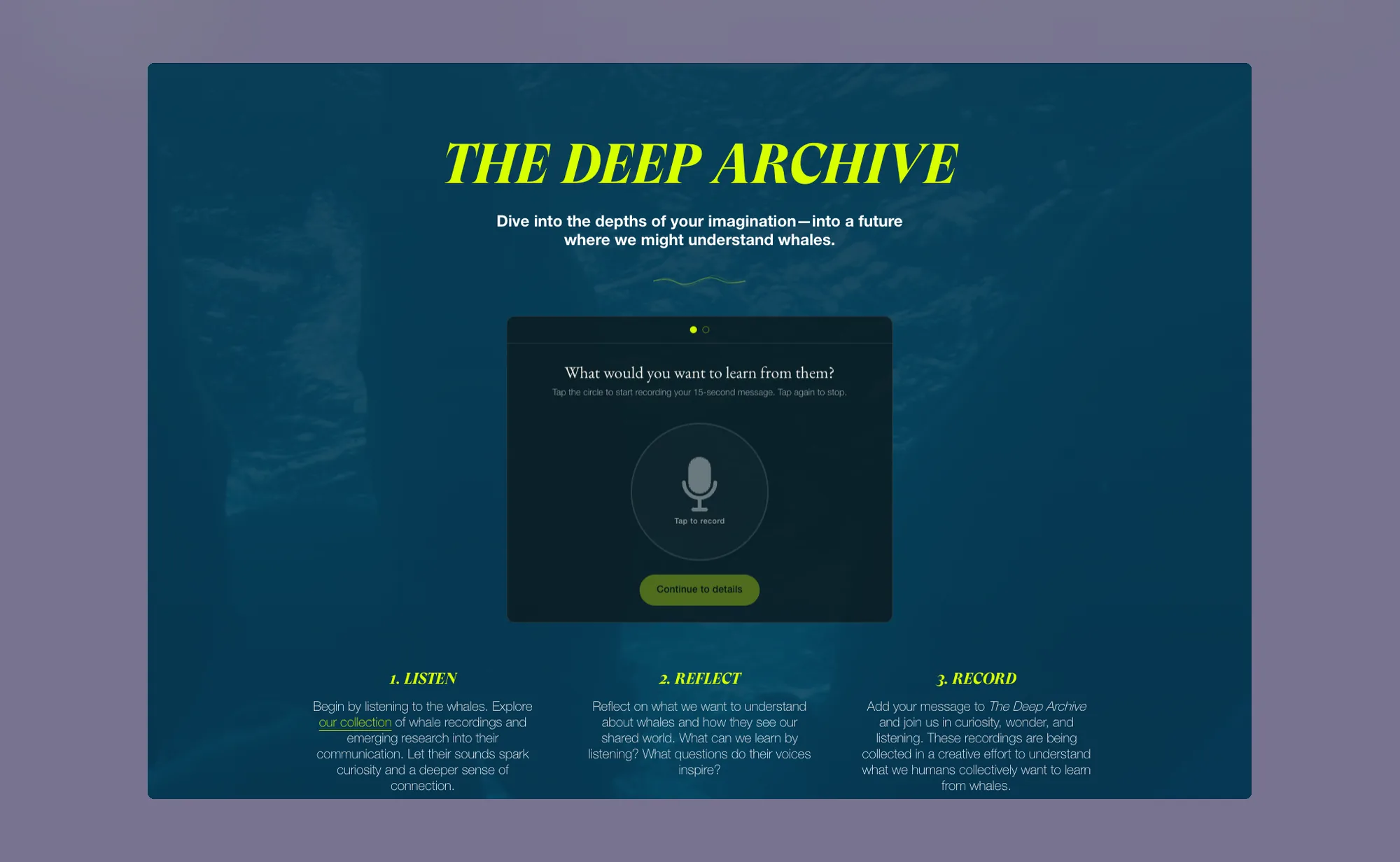
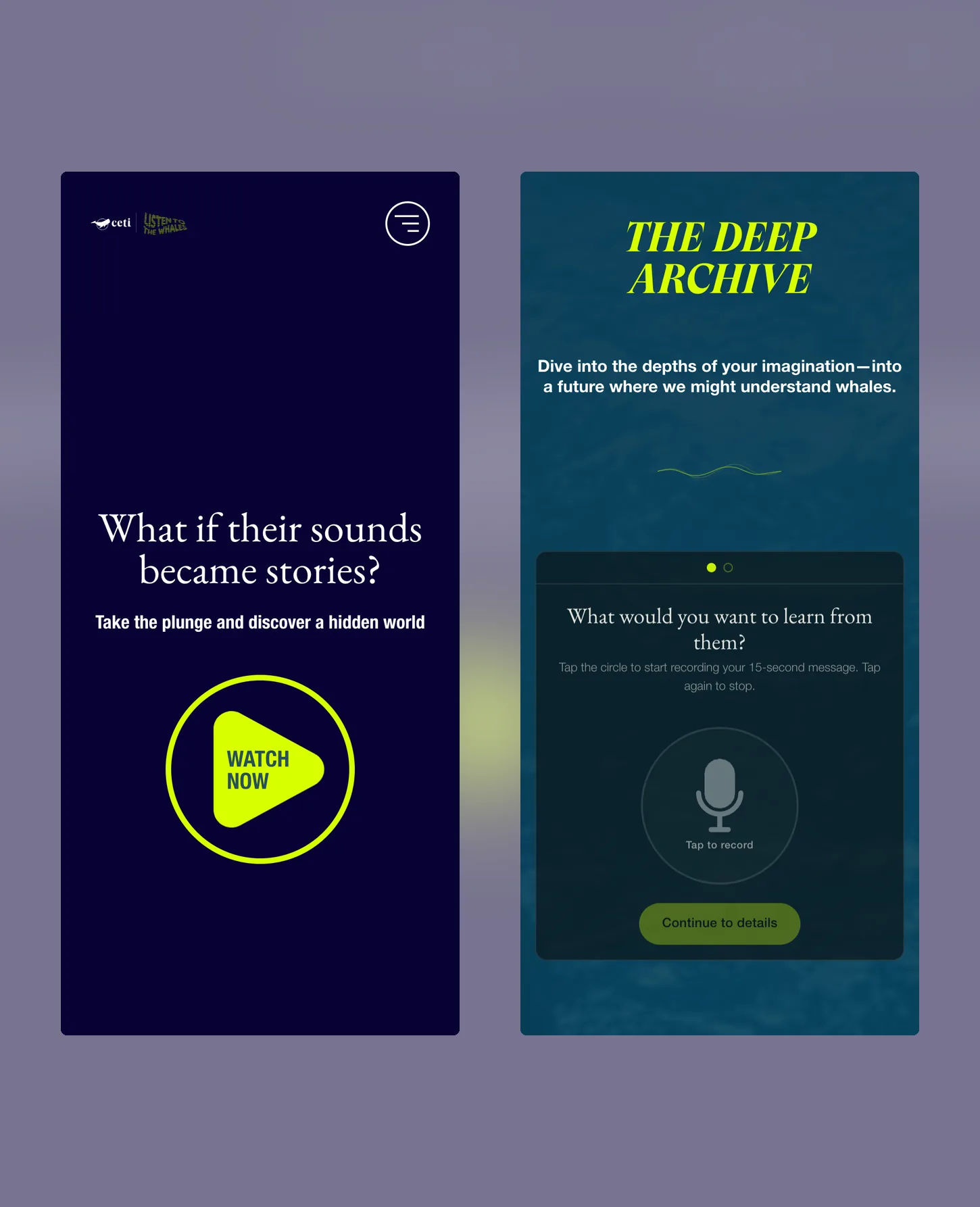
Then came the big idea. For World Oceans Day, CETI wanted visitors to record a short voice message for the whales, collected in something they called The Deep Archive. It needed a recorder that works in the browser, consent language approved with National Geographic's legal team, and every recording stored in CETI's own AWS account rather than a third-party tool. There was about a month to do it. Instead of static mockups, we put three fully working versions of the section on staging so CETI could react to the real thing. We connected the form to CETI's storage, capped messages at 15 seconds once the team saw longer ones arriving, and published at dawn, a few hours before the social announcement.
"Basically we had a month of time to set it up and launch it, and so it was moving way too quickly to bring in too many opinions, because we also had to get national geographic and their legal side signed off."
Ashley Zafaranlou, Project CETI
"Looks amazing! Thank you for the incredible work and fine-tuning to get the site ready…and the early wake-up call for you, Nico! Everything came together beautifully!"
Ashley Zafaranlou, Project CETI
How the archive learned to transcribe itself
Messages started rolling in, and a new question followed: how does a small team actually read, or rather listen to, all of them? Once World Oceans Day was behind them, CETI asked us to scope an automation. We built a transcription pipeline inside CETI's AWS account, so the audio and the text never leave CETI's hands. Every new recording is transcribed automatically and the transcript appears next to the entry in the Webflow CMS, with the detected language and duration, ready to export. Then we went back and transcribed every recording already in the archive, so the whole collection had transcripts from the start.
- 1 to 5 minutes from a new recording to its transcript
- 87 existing recordings backfilled with transcripts
What changed for CETI's team
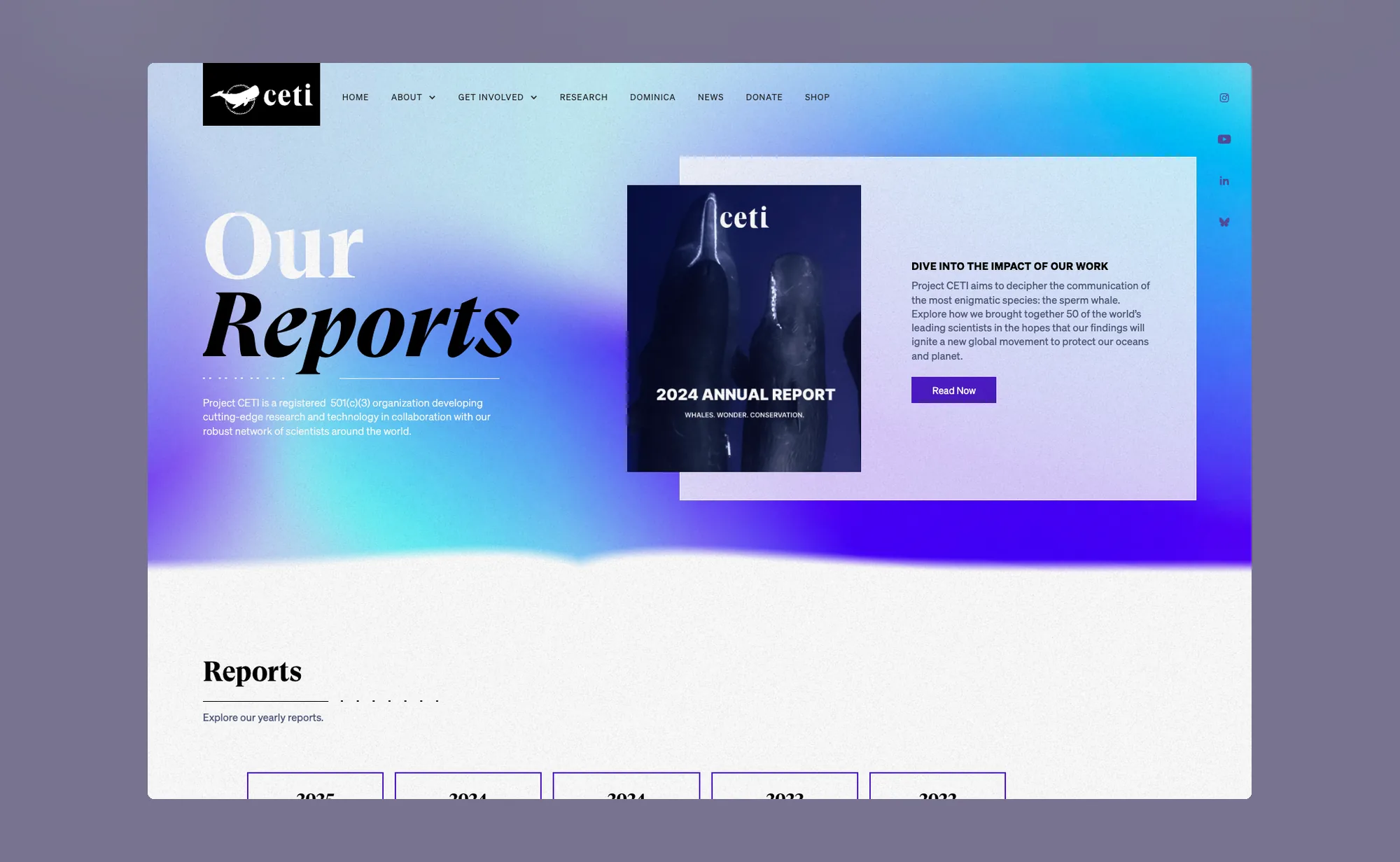
The Deep Archive is the headline, but the subscription reaches across both sites. On projectceti.org we fixed mobile issues on the research page, added the latest financial reports and ran an SEO audit to shape the next round of work. On Listen to the Whales, we work to keep every new section in line with the campaign Critical Mass designed, so the site can grow without losing its original voice. Ashley's team can export submissions whenever they want, or simply ask us for a fresh file.
"They're definitely happy with listening to the whales and have only said great things."
Ashley Zafaranlou, Project CETI
What happened after launch
A few weeks into the Deep Archive, the messages were no longer a test. People were recording what they would want to learn from whales, and teachers were bringing whole classrooms along. As CETI plans its next moments, starting with updates ahead of Climate Week, the site is ready to keep collecting. The campaign asked the world to listen. Now the website listens back.
"I think almost a hundred organic messages submitted, some of them are so beautiful, some of them are coming from students, that their teachers are, are inviting their classrooms to submit these messages."
Ashley Zafaranlou, Project CETI
Credits
- Client: Project CETI. Ashley Zafaranlou
- Campaign concept and design: Critical Mass (Natalie Clark, Design Director)
- Campaign partner (CETI's): National Geographic Society
- Webflow development, AWS integration and ongoing web team: Fri3nds (Terry, Nico)
- Services: Webflow development, AWS S3 integration, automatic transcription (AWS Transcribe), CDN setup, SEO audit, Fri3nds subscription
/ More work
Other Projects
More selected work from the last twelve months, across branding, website and graphic design.
Let's get your next pageout this week.

Some months need more than the block of hours covers. The same team scales up for a launch, a rebrand or a migration, without a new onboarding.
Book a free discovery call