
/ Case study
Trivver by RADCAT
RADCAT's design for Trivver went live as clean code on Trivver's own servers, built in Webflow by Fri3nds
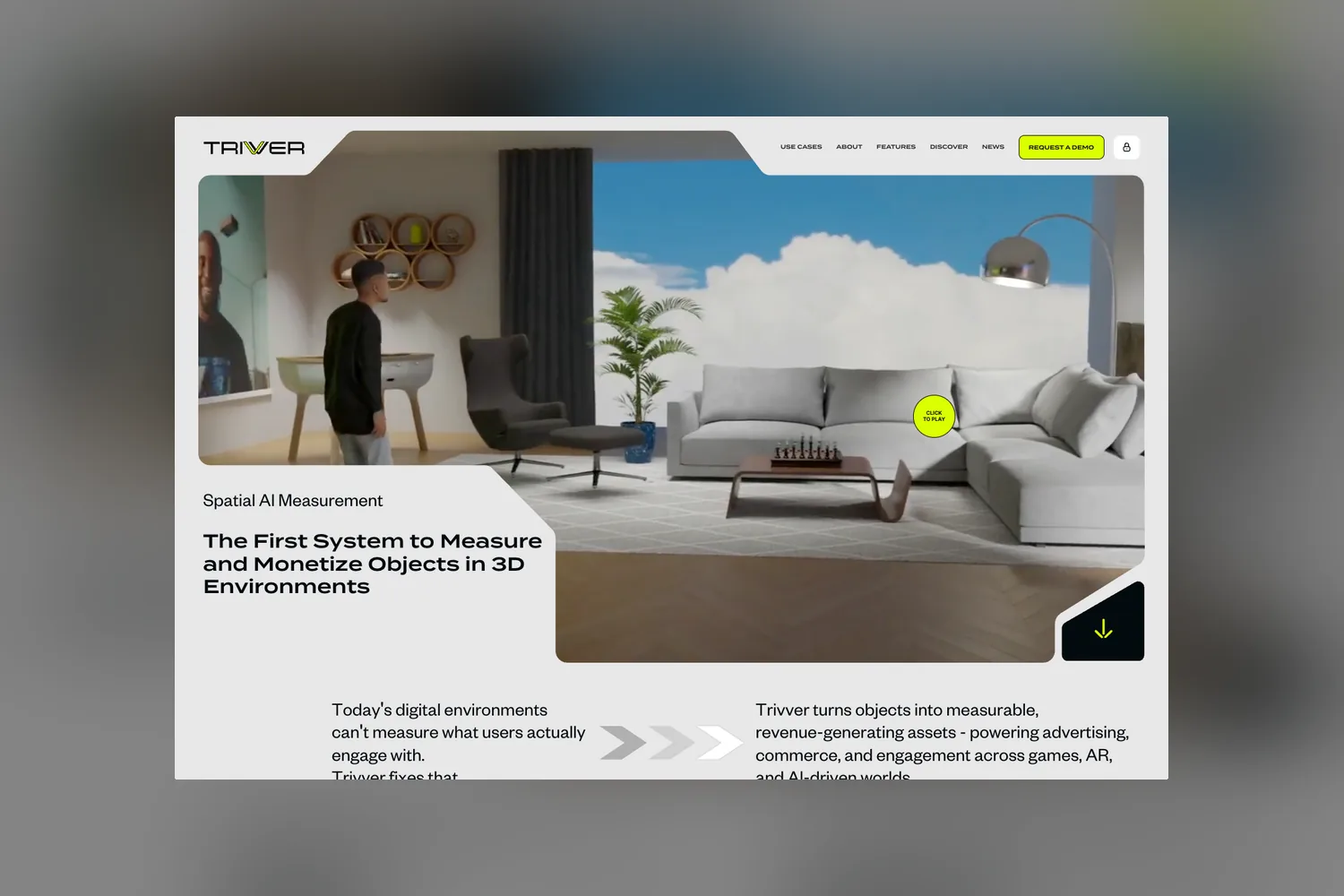
Fri3nds project record, 2026
Who RADCAT is and what they asked us to build
RADCAT Design is a design studio and an old friend of Fri3nds. Their client Trivver builds advertising and measurement technology for 3D and immersive worlds, and RADCAT had designed the next version of Trivver's website in Figma. The message from Andre Guerra at RADCAT was short: were we free to develop a Webflow site, starting next week? There was one twist. Trivver doesn't host its site on Webflow. Its team runs the website from its own code repository and cloud hosting. So the job was a Webflow build that had to leave Webflow at the end, as clean files Trivver could deploy on its own servers.
"It was built on Webflow and then we exported the code so they could put it in their server. So now we have continue working with their custom environment within GitHub for the next version."
— Andre Guerra, RADCAT Design
The challenge: a Webflow build that ends as code
We started with two pages and a plan: build the layout first, then the animations, then check in with RADCAT. Building in Webflow gave us speed and a visual review loop with the designers. Exporting it gave Trivver what it needed. The catch showed up in the first week: Webflow's code export doesn't carry CMS content without a paid plan. So we rebuilt everything that lived in the CMS as static pages, including the blog articles we carried over from Trivver's existing site. We pushed every round to a GitHub repository for Trivver's team and scrubbed external dependencies so the site wouldn't lean on anything Trivver didn't control.
- 2 pages in the original ask
- 10 pages delivered across three staged deliveries, then a features page, articles and legal pages
How we built the motion and the 3D
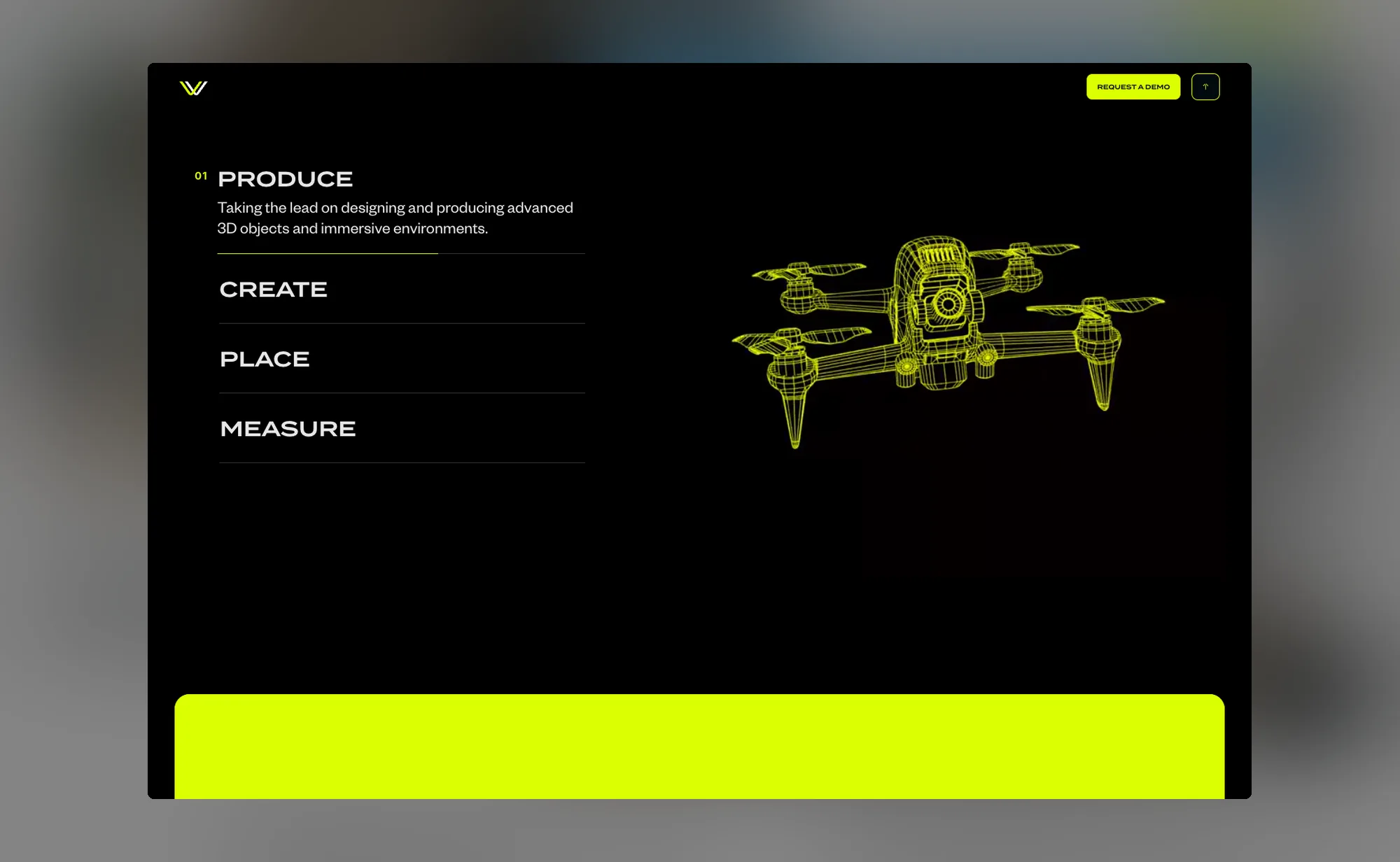
RADCAT's design asked a lot of the browser. Text and boxes animate in as you scroll, a spotlight follows the mouse across the dark sections, and the About page carries interactive 3D objects. We built the animations with GSAP and kept the 3D in three.js, packaged inside the export with its own build step and a README so Trivver's developers could compile it themselves.
A spotlight rebuilt, not shipped broken. One background animation was designed for a full-screen section, and in the new layout it distorted. Instead of shipping it broken, we built a near-identical spotlight effect that matched the other sections and sent it to RADCAT for approval first.
How we handed it off to Trivver's team
Trivver's team took the handoff seriously. They deployed our commits to their own staging site, tested on multiple platforms, browsers and devices, and sent their findings in one document. We turned every item into a tracked task, fixed what was ours, flagged what needed design direction from RADCAT, and reported status back in a shared sheet. Along the way we connected the site's analytics, matched the forms to the ones already live, and built the terms and privacy pages. Rajeev, on Trivver's side, was clear about the goal: get the site to a solid close and make Trivver self-sufficient for what came next. That's how we closed it: the code, the build steps and the backlog, in Trivver's hands.
What happened after launch
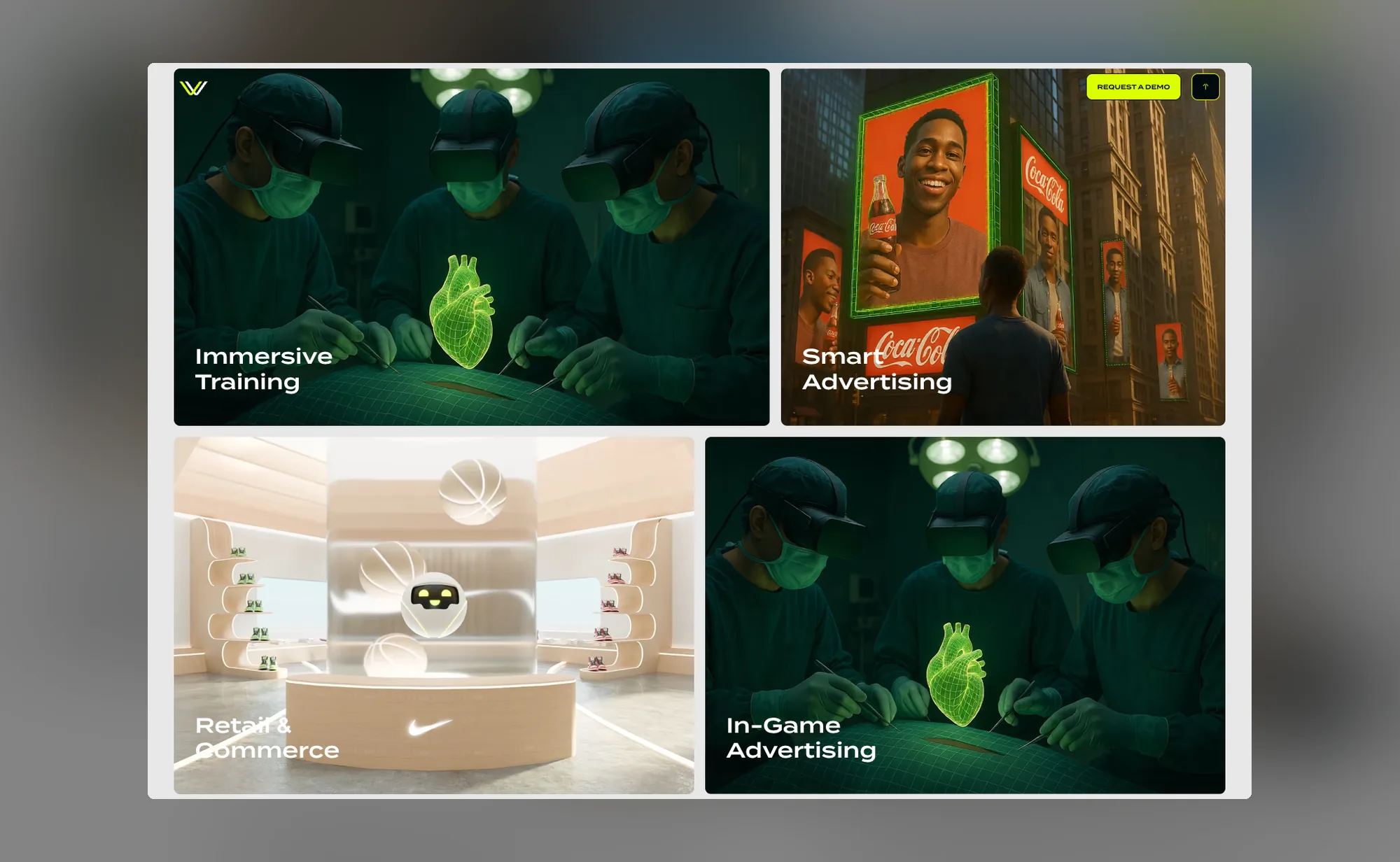
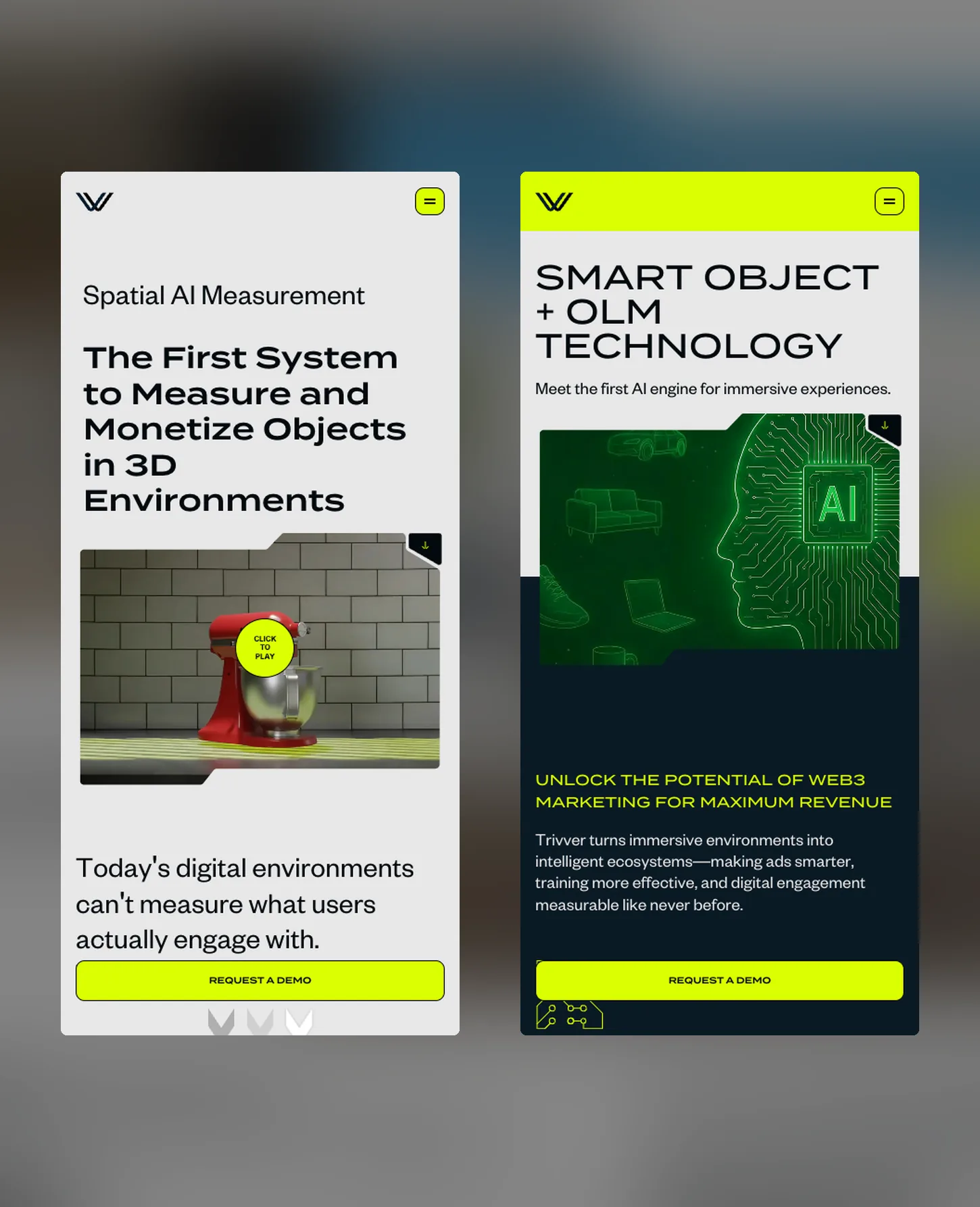
Today trivver.com runs on the pages we built in Webflow and exported: the home page, the use cases for immersive training, smart advertising, retail commerce and in-game advertising, the smart object features page, the About page with its 3D and spotlight sections, and the news and resources sections. It lives in Trivver's environment, deployed by Trivver's team, exactly as RADCAT described the job in the first message.
- ~7 weeks from RADCAT's first message to the last QA round
- Live on trivver.com, served from Trivver's own infrastructure, not Webflow hosting
Credits
Design and client relationship: RADCAT Design. Andre Guerra
Client: Trivver. Rajeev Dujari and Vitaly Yanovsky (QA and deployment)
Webflow development, code export, animation and 3D integration: Fri3nds (Nico Picotto, Terry, Esteban)
Services: Webflow development, Webflow code export, GSAP animation, three.js 3D integration, static site handoff via GitHub
/ More work
Other Projects
More selected work from the last twelve months, across branding, website and graphic design.
Let's get your next pageout this week.
Some months need more than the block of hours covers. The same team scales up for a launch, a rebrand or a migration, without a new onboarding.
Book a free discovery call